
Understanding the CIA Triad in Real Life
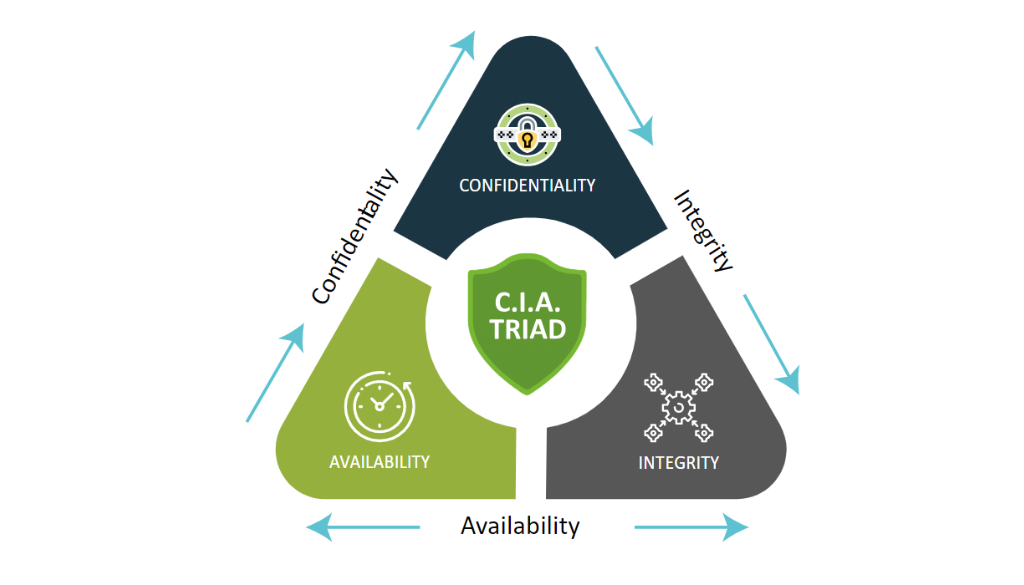
When people begin learning about cybersecurity, one concept appears repeatedly and forms the foundation of almost everything that follows: the CIA Triad. Despite its simple name, the CIA Triad represents three core principles that guide how information is protected in the digital world. These principles are Confidentiality, Integrity, and Availability. While the concept may sound theoretical at first, it becomes much clearer when viewed through real-life examples and everyday scenarios.
Confidentiality refers to ensuring that information is accessible only to those who are authorized to see it. In practical terms, confidentiality is about preventing unauthorized access to sensitive data. When you log into your email using a password, confidentiality is at work. When a bank encrypts customer data or restricts access to financial records, it is protecting confidentiality. Without this principle, private information such as personal identities, passwords, and financial details could be freely accessed by anyone, leading to serious consequences.
In real life, confidentiality is not limited to technology alone. Think of a sealed envelope containing personal information. Only the intended recipient should be able to open it. Cybersecurity applies the same idea digitally. Tools such as access controls, authentication mechanisms, and encryption exist to ensure that data stays private. However, confidentiality can also be compromised by human behavior, such as sharing passwords or falling victim to phishing attacks. This highlights why awareness and responsibility are just as important as technical controls.
Integrity focuses on maintaining the accuracy and trustworthiness of data. It ensures that information is not altered or tampered with, either intentionally or accidentally. In real-world terms, integrity is what allows you to trust that a bank balance displayed on your screen is correct or that a medical record reflects accurate patient information. If data integrity is compromised, decisions based on that data can lead to serious harm.
Consider an online transaction where payment details are modified during transmission. Even if the information remains confidential, the damage is significant if the data has been altered. Integrity ensures that data remains complete and unchanged unless modified by authorized individuals. Techniques such as checksums, hashing, and audit logs are used to detect and prevent unauthorized changes. Just like confidentiality, integrity relies on both technology and process discipline.
Availability ensures that systems and data are accessible when they are needed. This principle is often overlooked until something stops working. When a website goes offline, a service becomes unavailable, or systems are disrupted during critical operations, availability has been compromised. In real life, availability is essential for services such as hospitals, transportation systems, and online banking platforms, where downtime can have serious consequences.
Cyberattacks like denial-of-service incidents directly target availability by overwhelming systems so legitimate users cannot access them. Availability is protected through backups, redundancy, monitoring, and disaster recovery planning. Importantly, availability is not just about preventing attacks; it also includes ensuring systems can recover quickly from failures, whether caused by technical issues or natural disasters.
What makes the CIA Triad particularly powerful is the balance between its three components. Overemphasizing one while ignoring the others can weaken overall security. For example, extreme confidentiality measures may make systems difficult to access, harming availability. Similarly, focusing only on availability without protecting integrity can lead to unreliable data. Cybersecurity professionals constantly work to maintain this balance based on organizational needs.
In real life, the CIA Triad helps organizations make informed security decisions. It provides a simple yet effective framework to evaluate risks, design controls, and respond to incidents. Whether protecting personal data, business operations, or national infrastructure, these three principles remain central to cybersecurity practice.
Understanding the CIA Triad is not just an academic exercise. It offers a practical lens through which digital risks can be understood and managed. By applying confidentiality, integrity, and availability thoughtfully, individuals and organizations can build systems that are both secure and reliable in an increasingly digital world.
Curious to learn more? Continue your learning journey by purchasing the book from the provided link:
https://anandshinde.com/product/cybersecurity-career-compass/
Get to know the author behind the words—visit
https://anandshinde.com/