
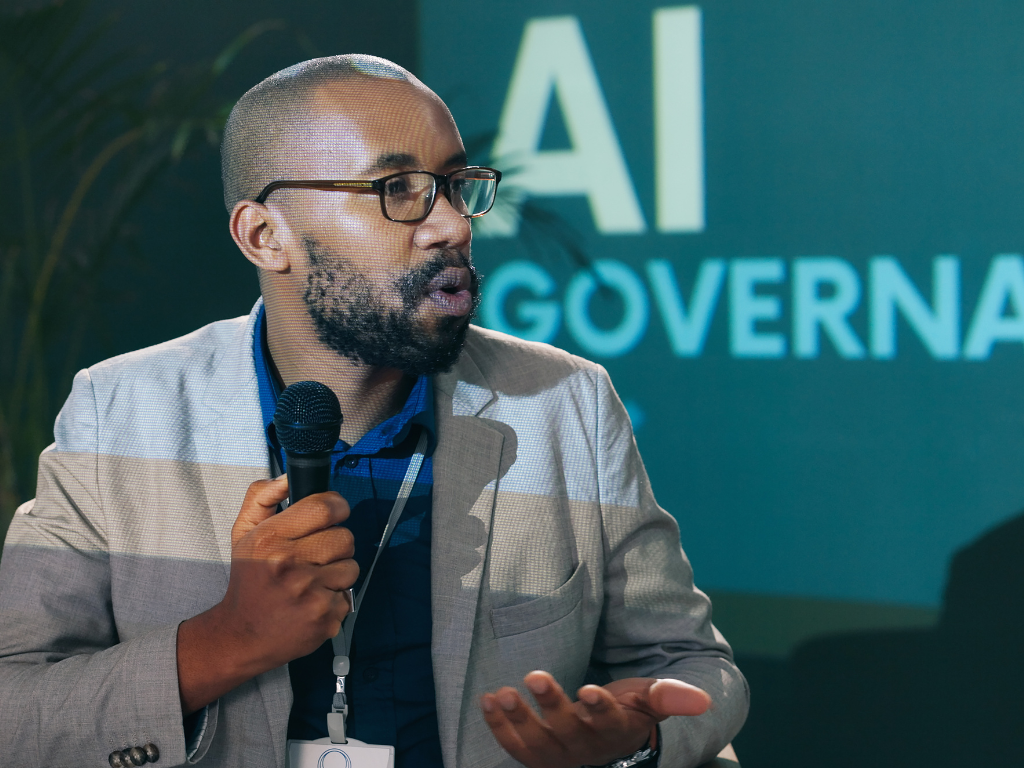
Artificial intelligence is no longer only an experimental technology. It is now used in business operations, cybersecurity, customer service, healthcare, finance, education, software development, publishing, recruitment, legal review, and decision support. Organizations are using AI to summarize documents, automate tasks, detect threats, generate content, review data, write code, and support strategic decisions.
This growth is exciting, but it also creates responsibility.
AI systems can make mistakes. They can create biased results, expose sensitive data, generate false information, produce insecure code, or behave in unexpected ways. If AI is used without rules, it can create legal, ethical, cybersecurity, privacy, and business risks.
This is why AI governance has become so important.
Modern AI governance frameworks help organizations use AI safely, responsibly, and effectively. They provide structure for managing AI risks, protecting data, assigning accountability, ensuring transparency, and keeping human oversight where it matters.
AI governance is not about stopping innovation. It is about making innovation trustworthy.
What Is AI Governance?
AI governance is the set of policies, processes, roles, controls, and decision-making structures used to guide how artificial intelligence is developed, deployed, monitored, and used.
In simple words, AI governance answers important questions:
- Who is allowed to use AI?
- What data can be used with AI?
- Which AI tools are approved?
- Who owns AI decisions?
- How are risks assessed?
- How are outputs verified?
- How is privacy protected?
- How are mistakes handled?
- How do we monitor AI systems after deployment?
Without governance, AI adoption can become uncontrolled. Different teams may use different tools. Employees may upload confidential data to public AI platforms. Developers may deploy models without testing. Business teams may rely on AI outputs without review. Security teams may not know where AI is being used.
Governance brings visibility, control, and accountability.
Why AI Governance Matters
AI governance matters because AI can affect people, business decisions, security, and trust. A poorly governed AI system may cause harm even when nobody intends to do anything wrong.
For example, an AI chatbot may give incorrect advice to customers. An AI recruitment tool may rank candidates unfairly. An AI coding assistant may suggest insecure code. An AI analytics tool may expose personal data. An AI security tool may miss threats or create too many false alerts.
These are not only technical issues. They can become legal, reputational, operational, and ethical problems.
AI governance helps organizations identify these risks before they become incidents. It also helps leadership understand where AI is used and whether the use is appropriate.
A business should not ask only, “Can we use AI?” It should also ask, “Should we use AI here, and how do we use it safely?”
Core Principles of AI Governance
Most modern AI governance frameworks are built around a few common principles.
The first is accountability. Every AI system should have an owner. Someone must be responsible for how it is used, how risks are managed, and how issues are addressed.
The second is transparency. Users and stakeholders should understand when AI is being used, what it is doing, and what limitations it has.
The third is fairness. AI systems should be tested to reduce bias and avoid unfair treatment.
The fourth is privacy. AI should not collect, process, or expose personal data unnecessarily.
The fifth is security. AI systems should be protected against attacks such as prompt injection, data poisoning, model theft, and misuse.
The sixth is human oversight. AI should not make high-impact decisions without appropriate human review.
The seventh is reliability. AI systems should be tested, monitored, and improved so they continue to perform as expected.
These principles help organizations move from casual AI use to responsible AI adoption.
NIST AI Risk Management Framework
One widely discussed approach to AI governance is the NIST AI Risk Management Framework. It helps organizations think about AI risk in a structured way.
The framework is useful because it focuses on managing AI risks across the lifecycle. It encourages organizations to govern AI, map the context, measure risks, and manage those risks through controls and monitoring.
This is practical because AI risk is not one single issue. It includes technical risk, privacy risk, security risk, social risk, legal risk, and operational risk.
For example, before deploying an AI system, an organization should understand its purpose, users, data sources, limitations, and possible impact. It should then measure risks such as bias, accuracy, privacy exposure, security weaknesses, and misuse potential. Finally, it should manage those risks through testing, controls, documentation, monitoring, and human oversight.
The value of this type of framework is that it gives organizations a repeatable method. Instead of reacting to AI problems after they happen, teams can assess and manage risks early.
ISO/IEC 42001 and AI Management Systems
Another important development in AI governance is the idea of an AI management system. ISO/IEC 42001 provides a structured approach for organizations that want to manage AI responsibly.
A management system approach is helpful because it connects AI governance with leadership, policy, planning, risk management, operational controls, performance evaluation, and continual improvement.
This is similar to how organizations manage information security, quality, privacy, or service management. Instead of treating AI governance as a one-time project, it becomes an ongoing system.
An AI management system can help organizations define AI policies, assign responsibilities, assess risks, document decisions, review suppliers, manage data, monitor performance, and improve controls over time.
This is especially useful for organizations that use AI in serious business processes. If AI affects customers, employees, financial decisions, security operations, or regulated data, a structured management system becomes valuable.
AI governance should not depend only on individual awareness. It should be built into organizational processes.
EU AI Act and Risk-Based Governance
Modern AI governance is also influenced by regulation. One major regulatory direction is risk-based governance. The basic idea is simple: not all AI systems carry the same level of risk.
An AI tool used to summarize public articles is very different from an AI system used for hiring, credit scoring, medical decisions, law enforcement, or critical infrastructure.
A risk-based approach helps organizations apply stronger controls where the impact is higher.
Low-risk AI may need basic transparency and acceptable use rules. High-risk AI may require detailed documentation, human oversight, accuracy testing, data governance, monitoring, and stronger accountability.
This approach makes sense because applying the same controls to every AI use case would be inefficient. Organizations need to focus effort where harm is more likely or more serious.
Risk-based governance helps teams prioritize.
AI Governance and Cybersecurity
AI governance and cybersecurity are deeply connected. AI systems can create new security risks, and cybersecurity teams must be involved in AI governance.
For example, AI tools may process sensitive logs, security alerts, customer data, source code, or internal documents. If access is weak, attackers may steal or manipulate that data.
AI models may be attacked through prompt injection, adversarial inputs, data poisoning, model extraction, or supply chain compromise. AI-generated code may introduce vulnerabilities. AI chatbots may reveal confidential information if poorly designed.
Cybersecurity teams should help define security requirements for AI systems. They should review access controls, logging, data protection, vendor risk, secure development, monitoring, and incident response.
AI governance should also include rules for employees using AI tools. Staff should know what information they can share, which tools are approved, and what risks to report.
AI without cybersecurity governance can become a hidden attack surface.
Building an AI Governance Framework
Organizations can begin AI governance with a simple but structured approach.
First, create an AI inventory. The organization should know which AI tools and systems are being used. This includes official tools, pilot projects, third-party AI features, AI coding assistants, chatbots, analytics tools, and employee-used platforms.
Second, classify AI use cases by risk. A public content writing tool is not the same as an AI system processing customer data or making business decisions.
Third, define policies. Policies should explain approved tools, restricted data, acceptable use, human review, vendor requirements, and reporting expectations.
Fourth, assign ownership. Every AI system should have a business owner and a technical owner.
Fifth, assess vendors. Organizations should understand how AI providers handle data, security, privacy, logging, retention, and model training.
Sixth, implement controls. This may include access control, encryption, monitoring, approval workflows, data masking, output validation, and security testing.
Seventh, monitor and improve. AI governance is not finished after deployment. Systems must be reviewed regularly because models, data, users, and risks change.
This approach helps organizations move from confusion to control.
Data Governance for AI
Data is one of the most important parts of AI governance. AI systems depend on data for training, prompts, retrieval, analytics, and decision support. If data is poor, biased, sensitive, outdated, or unauthorized, the AI system may create risk.
Organizations should define what data can be used for AI and under what conditions. Sensitive personal data should be protected carefully. Confidential business information should not be uploaded to unapproved tools. Training data should be reviewed for quality and fairness.
Data minimization is important. AI systems should use only the data needed for the task. More data is not always better if it increases privacy risk.
Data lineage also matters. Teams should understand where data came from, how it was collected, how it was modified, and whether it can legally and ethically be used.
Good AI governance begins with good data governance.
Human Oversight and Accountability
AI systems can support human decision-making, but they should not remove human responsibility. This is especially important for high-impact decisions.
Human oversight means qualified people review AI outputs, question results, and take responsibility for final decisions. It does not mean humans blindly click approve.
For example, if AI supports hiring, a human should review the recommendation and ensure fairness. If AI supports cybersecurity response, an analyst should validate serious actions before accounts are disabled or systems are blocked. If AI generates legal or policy content, a knowledgeable person should check accuracy.
Accountability must be clear. If an AI system makes a mistake, the organization must know who investigates, who communicates, and who improves the process.
AI can assist judgment. It should not erase responsibility.
Monitoring AI Systems
AI systems should be monitored after deployment. Many organizations test AI before launch but forget that performance can change over time.
Models may drift. Data may change. Users may use the system in unexpected ways. Attackers may try new manipulation techniques. Business requirements may evolve.
Monitoring should include accuracy, bias, user feedback, security alerts, unusual prompts, access patterns, output quality, and system performance.
For high-risk AI systems, regular reviews should be required. Organizations should check whether the system still meets its purpose and whether controls remain effective.
AI governance is continuous. A system that was safe last year may not be safe today.
Employee Awareness
Employees are a key part of AI governance. Even the best framework can fail if users do not understand it.
Employees should know which AI tools are approved, what data they can use, what data is restricted, how to verify AI output, and how to report concerns.
Training should explain practical risks such as hallucination, data leakage, fake AI-generated content, deepfakes, phishing, and overreliance on AI.
The goal is not to scare employees. The goal is to help them use AI confidently and responsibly.
AI awareness is now part of digital literacy.
Final Thoughts
Modern AI governance frameworks are essential because AI is becoming part of daily business and decision-making. Without governance, AI adoption can become uncontrolled, risky, and difficult to trust.
Good governance helps organizations use AI with responsibility. It creates visibility, accountability, privacy protection, security controls, human oversight, vendor review, monitoring, and continual improvement.
AI governance is not only for large technology companies. Any organization using AI should think about governance, even if the first steps are simple.
The future will not belong only to organizations that use AI. It will belong to organizations that use AI safely, ethically, and effectively.
AI creates power. Governance gives that power direction.
To know more about Anand Shinde and his work in cybersecurity, awareness, and books:
https://anandshinde.com/
Have knowledge, experience, or a practical guide you want to turn into a book? Get your book published with DevOM Publishing:
https://www.devompublishing.com/index.php
If your business needs AI governance, cybersecurity strategy, AI risk assessment, or protection against modern digital threats, visit CyberPrysm:
https://cyberprysm.com/
AI governance turns innovation into trust. Without it, intelligence can become risk.