
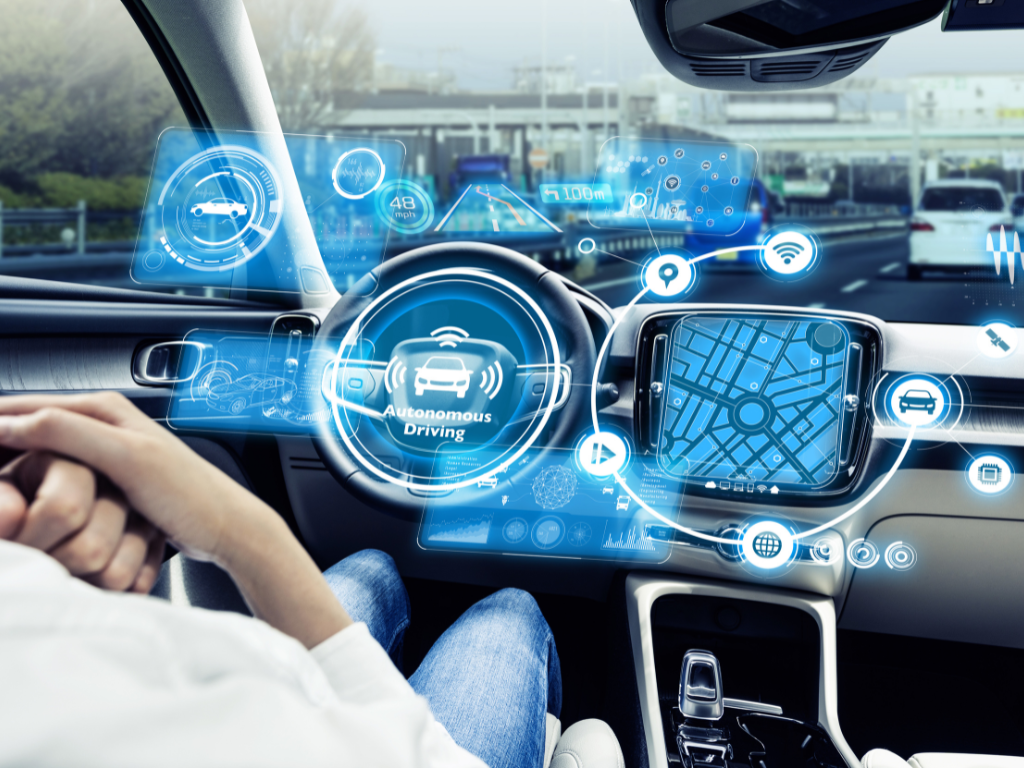
Autonomous systems are becoming a major part of modern technology. We are seeing self-driving vehicles, delivery robots, industrial robots, drones, smart manufacturing systems, autonomous ships, AI-powered monitoring tools, robotic warehouses, and intelligent machines that can sense, decide, and act with limited human involvement.
These systems are powerful because they combine sensors, software, artificial intelligence, connectivity, automation, and physical movement. They can improve efficiency, reduce human effort, support safety, operate in dangerous environments, and make faster decisions than traditional systems.
But autonomy also creates serious cybersecurity risks.
When a normal computer is compromised, data may be stolen or systems may be disrupted. When an autonomous system is compromised, the impact can move from the digital world into the physical world. A hacked drone may fly into a restricted area. A manipulated robot may damage equipment. A self-driving vehicle may receive false sensor input. An industrial autonomous system may stop production or create safety hazards.
Cybersecurity for autonomous systems is therefore not only about protecting software. It is about protecting people, machines, decisions, data, safety, and trust.
What Are Autonomous Systems?
Autonomous systems are machines or software-driven platforms that can perform tasks with limited human control. They use sensors to understand their environment, algorithms to make decisions, and actuators or software actions to carry out tasks.
Examples include autonomous cars, drones, robotic process systems, smart factory equipment, automated warehouses, AI-based surveillance tools, medical robots, autonomous agricultural machines, and robotic delivery systems.
Some autonomous systems are fully independent. Others are semi-autonomous, meaning a human still supervises or intervenes when needed. The level of autonomy may vary depending on the system, industry, and risk involved.
What makes these systems different is that they do not simply wait for step-by-step human commands. They observe, process, decide, and act. This makes them useful, but also increases the need for strong cybersecurity controls.
If a system can make decisions, attackers may try to influence those decisions.
Why Autonomous Systems Need Strong Cybersecurity
Autonomous systems depend on many connected components. They may include sensors, cameras, GPS, control units, machine learning models, cloud platforms, communication networks, APIs, mobile applications, remote management tools, and software updates.
Each component can become an attack point.
A hacker may try to interfere with sensors, manipulate data, compromise communication channels, inject malicious software, steal control credentials, disrupt navigation, or abuse remote access. In some cases, attackers may not need to fully take control. They may only need to confuse the system enough to make it behave incorrectly.
This is dangerous because autonomous systems often operate in real-world environments. Their decisions can affect roads, factories, hospitals, farms, warehouses, and public spaces.
Cybersecurity must therefore be built into the entire autonomous system lifecycle: design, development, testing, deployment, operation, monitoring, maintenance, and retirement.
Security cannot be added after the system is already running in the field.
The Role of Sensors and Data
Autonomous systems depend heavily on data from sensors. Cameras, radar, lidar, GPS, microphones, temperature sensors, pressure sensors, motion sensors, and other inputs help the system understand what is happening around it.
If sensor data is wrong, the system’s decision may also be wrong.
Attackers may attempt sensor spoofing or manipulation. For example, false GPS signals may mislead a navigation system. A visual pattern may confuse an image recognition model. A fake signal may make a system believe an obstacle exists when it does not, or ignore an obstacle that is actually present.
This is why sensor security is critical. Systems should not blindly trust one input source. They should use sensor fusion, where multiple sources are compared to make better decisions. If one sensor gives strange information, the system should detect the inconsistency.
Data integrity matters. An autonomous system must be able to trust the information it uses to act.
AI Model Security
Many autonomous systems use artificial intelligence or machine learning. These models may help with object detection, route planning, decision-making, risk scoring, anomaly detection, or control optimization.
AI models can be attacked in different ways. Attackers may poison training data, manipulate inputs, steal model information, or create adversarial examples designed to trick the model.
For example, a small change in an image may cause an AI system to misclassify an object. A model trained on poor or manipulated data may make unsafe decisions. A stolen model may help attackers understand weaknesses and design better attacks.
AI model security should include trusted training data, model testing, adversarial testing, access control, monitoring, and regular validation. Models should not be treated as black boxes that are automatically correct.
Autonomous systems need explainability and accountability. When a system makes a decision, organizations should understand why and how that decision happened, especially in safety-critical environments.
Secure Communication
Autonomous systems often communicate with other systems. A drone may communicate with a control station. A vehicle may communicate with cloud services. A robot may communicate with a factory control platform. A fleet of machines may share status information through wireless networks.
If communication is not secure, attackers may intercept, modify, or replay messages. They may send fake commands, block important updates, or steal sensitive data.
Secure communication should include encryption, authentication, message integrity, and protection against replay attacks. Devices and systems should verify each other before exchanging commands or data.
Remote access must be carefully controlled. Default passwords, open management ports, weak APIs, or unsecured wireless connections can create serious risk.
An autonomous system should not accept commands from unknown or untrusted sources.
Software Updates and Patch Management
Autonomous systems need regular software updates. Updates may fix bugs, improve performance, add features, or patch security vulnerabilities. But the update process itself can become a target.
If attackers can compromise the update mechanism, they may install malicious software across many devices. This is especially dangerous for fleets of autonomous systems.
Updates should be signed, verified, and delivered through secure channels. The system should check that the update comes from a trusted source and has not been modified. Rollback protection may also be needed to stop attackers from forcing systems back to older vulnerable versions.
Organizations should maintain an inventory of autonomous systems and their software versions. They should know which devices are updated, which are outdated, and which need urgent attention.
Patch management is difficult in autonomous systems because some machines operate in remote or safety-critical environments. Updates must be tested carefully, but delays can also create risk.
The update process must balance safety, reliability, and security.
Identity and Access Control
Autonomous systems require strong identity management. Users, administrators, devices, services, and applications must be clearly identified and controlled.
A technician may need access for maintenance. A cloud service may need to send configuration updates. A monitoring system may need to collect logs. A command station may need to control a machine. Each identity should have only the access required for its role.
Shared accounts should be avoided. Administrative access should require multi-factor authentication where possible. Privileged actions should be logged and monitored.
Access should also be removed when no longer needed. If a contractor, vendor, or employee leaves, their access should not remain active.
Autonomous systems can be powerful. Access to them should be treated with the same seriousness as access to critical infrastructure.
Physical Safety and Cybersecurity
One of the most important differences between autonomous systems and ordinary IT systems is physical impact. A cyberattack can lead to movement, collision, equipment damage, production interruption, or human injury.
This means cybersecurity teams must work closely with safety engineers, operations teams, product teams, and risk managers. Security decisions should consider physical consequences.
For example, if suspicious activity is detected, should the system stop immediately, slow down, switch to manual mode, isolate itself, or continue safely until it reaches a controlled state? The answer depends on the system.
Emergency stop functions, fail-safe modes, manual override, and safety boundaries are important. However, these controls must also be protected from misuse. Attackers should not be able to trigger emergency stops repeatedly to cause disruption.
Safety and cybersecurity must be designed together.
Monitoring and Threat Detection
Autonomous systems should be continuously monitored. Security teams should collect logs from devices, control systems, cloud platforms, APIs, user access, communication channels, and software updates.
Monitoring should look for unusual behavior. Examples include unexpected commands, abnormal routes, repeated failed logins, unusual sensor patterns, unauthorized configuration changes, strange network traffic, or unexpected system restarts.
Threat detection in autonomous systems must include both cyber and operational signals. A technical event may look harmless alone, but combined with unusual physical behavior, it may indicate a serious issue.
For example, if a robot begins operating outside normal speed limits after a configuration change, that should be investigated. If a drone receives commands from an unfamiliar source, that should trigger alerts.
Visibility is essential. You cannot protect what you cannot observe.
Supply Chain Security
Autonomous systems depend on hardware, software, firmware, chips, sensors, open-source libraries, AI models, vendors, and cloud services. This creates supply chain risk.
A vulnerable component can affect the entire system. A compromised software library may introduce malicious code. A weak vendor may expose remote management tools. A hardware component may include insecure firmware.
Organizations should review suppliers carefully. They should ask about secure development, vulnerability disclosure, update processes, component origin, testing, and incident response.
Software bills of materials can help identify what components are used inside a system. This becomes important when a vulnerability is discovered in a library or component.
Autonomous systems are only as secure as the components and partners behind them.
Incident Response for Autonomous Systems
Incident response plans for autonomous systems must include both digital and physical response. If an attack is suspected, teams must know how to isolate affected systems, revoke credentials, stop unsafe operations, preserve evidence, communicate with stakeholders, and restore trusted functionality.
The plan should define roles clearly. Security teams, engineers, operations teams, legal teams, vendors, and leadership may all need to be involved.
For high-risk systems, incident response exercises should include realistic scenarios. What happens if a fleet receives suspicious commands? What happens if GPS signals are spoofed? What happens if a software update fails? What happens if a robot behaves unexpectedly?
Practice reduces panic.
Autonomous systems require response plans before something goes wrong.
Best Practices for Securing Autonomous Systems
Organizations should begin with secure design. Threat modeling should identify possible attacks and safety impacts. Security requirements should be built into the system architecture.
Use strong authentication and least privilege. Protect communication with encryption. Validate sensor data. Secure AI models. Sign software updates. Monitor device behavior. Segment networks. Control remote access. Maintain asset inventory. Review suppliers. Test fail-safe modes. Train operators. Prepare incident response plans.
Security should continue after deployment. Autonomous systems operate in changing environments. New vulnerabilities, threats, and operational risks will appear over time.
Security must be continuous.
Final Thoughts
Autonomous systems are shaping the future of transportation, healthcare, manufacturing, logistics, agriculture, defense, and smart infrastructure. They can reduce human effort, improve efficiency, and support complex decision-making. But because they connect digital intelligence with physical action, they must be secured with great care.
Cybersecurity for autonomous systems must protect sensors, data, AI models, communication, software updates, identities, remote access, and physical safety. It must also include monitoring, supply chain review, and incident response.
The more autonomy we give to machines, the more responsibility we must take for securing them.
Autonomous systems can help build a smarter future. Cybersecurity helps make that future safe.
To know more about Anand Shinde and his work in cybersecurity, awareness, and books:
https://anandshinde.com/
Have knowledge, experience, or a practical guide you want to turn into a book? Get your book published with DevOM Publishing:
https://www.devompublishing.com/index.php
If your business needs autonomous system security review, AI security guidance, cybersecurity strategy, or protection against modern digital threats, visit CyberPrysm:
https://cyberprysm.com/
Autonomous systems make machines smarter. Cybersecurity makes sure that intelligence remains safe, controlled, and trusted.