Industrial operations are the backbone of modern life. They keep factories running, power plants producing energy, water systems operating, transportation networks moving, food processing lines working, and critical services available. Behind many of these operations are industrial control systems, sensors, machines, controllers, engineering workstations, monitoring platforms, and operational technology networks.
For many years, industrial systems were managed mainly for safety, reliability, and availability. Cybersecurity was not always treated as a top priority because many industrial environments were isolated from the internet and separated from corporate IT networks.
That separation is no longer guaranteed.
Today, industrial operations are more connected than ever. Companies connect machines to business dashboards, use remote vendor access, collect production data for analytics, integrate cloud services, deploy industrial IoT sensors, and automate more processes. This connectivity brings efficiency, visibility, and better decision-making. But it also brings cyber risk.
Cybersecurity for industrial operations is about protecting the systems that control real-world processes. It is not only about protecting data. It is about protecting production, safety, equipment, workers, customers, and critical services.
When industrial cybersecurity fails, the impact can move from the screen into the physical world.
What Are Industrial Operations?
Industrial operations include the processes, systems, and technologies used to produce, move, monitor, or control physical goods and services. This can include manufacturing, energy, oil and gas, water treatment, mining, chemicals, pharmaceuticals, transportation, logistics, food production, and utilities.
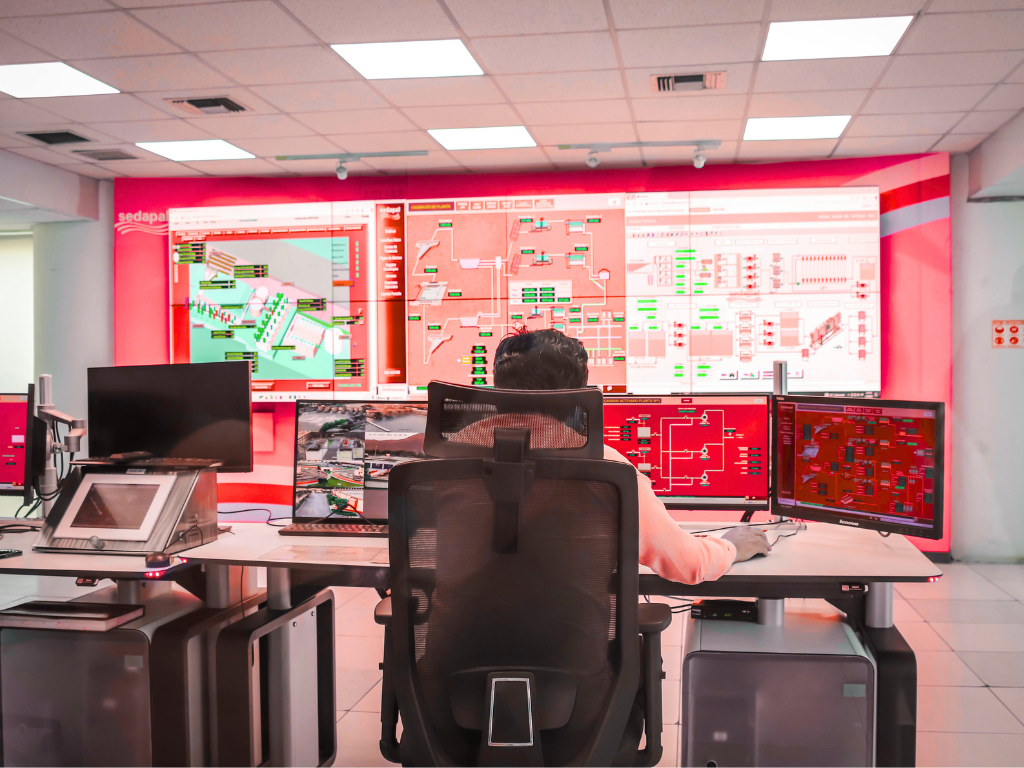
These environments often use operational technology, commonly called OT. OT includes industrial control systems, programmable logic controllers, human-machine interfaces, distributed control systems, supervisory control and data acquisition systems, sensors, actuators, safety systems, and industrial communication networks.
Unlike ordinary office IT systems, OT systems directly interact with physical processes. They may open valves, control motors, monitor pressure, regulate temperature, manage production lines, or stop equipment during unsafe conditions.
This makes industrial cybersecurity very different from normal IT security. A mistake can affect not only information, but physical operations.
Why Industrial Cybersecurity Matters
Industrial cybersecurity matters because industrial environments are becoming attractive targets for attackers. Ransomware groups may attack manufacturing companies because downtime creates financial pressure. Nation-state actors may target critical infrastructure. Hackers may exploit exposed systems. Insiders or careless vendors may create risk. Malware from IT networks may spread into OT environments if separation is weak.
A cyberattack on industrial operations can cause serious consequences. Production may stop. Orders may be delayed. Equipment may be damaged. Safety systems may be affected. Regulatory obligations may be triggered. Customers may lose trust. In critical infrastructure, public services may be disrupted.
The cost of downtime in industrial environments can be extremely high. Even a few hours of disruption may affect supply chains, revenue, and customer commitments.
This is why industrial cybersecurity must be treated as a business resilience issue, not only a technical issue.
IT and OT Are Different
One of the most important points in industrial cybersecurity is understanding the difference between IT and OT.
IT systems usually manage information. These include email, laptops, servers, databases, websites, cloud platforms, and business applications. In IT, confidentiality is often very important.
OT systems manage physical operations. These include machines, sensors, controllers, process systems, and industrial networks. In OT, availability, safety, and reliability are often the top priorities.
This difference affects cybersecurity decisions.
For example, an IT laptop can usually be restarted after patching. An industrial production line may not be easy to stop. A security scan on an IT system may be normal. The same scan on a fragile OT device may cause performance issues. A patch may fix a vulnerability but may also require testing to ensure it does not disrupt operations.
Cybersecurity teams must respect operational realities. Industrial cybersecurity must be done with engineering teams, not against them.
Asset Visibility Comes First
The first step in protecting industrial operations is knowing what exists. Many organizations do not have a complete and updated inventory of industrial assets.
There may be controllers, sensors, engineering workstations, servers, network switches, remote access tools, vendor devices, legacy systems, and temporary equipment installed over many years. Some may not be documented properly. Some may be owned by vendors. Some may be critical but forgotten.
Without asset visibility, security becomes guesswork.
An industrial asset inventory should include device name, type, location, owner, vendor, software or firmware version, network zone, communication protocol, criticality, and support status.
This inventory helps with vulnerability management, incident response, network segmentation, patch planning, and risk assessment.
You cannot protect an industrial operation if you do not know what is inside it.
Network Segmentation
Network segmentation is one of the most important controls for industrial cybersecurity. Industrial networks should not be flat or freely connected to corporate IT networks.
A flat network allows attackers to move easily if they compromise one device. For example, if a phishing email compromises an office computer, poor segmentation may allow attackers to move toward industrial systems.
Segmentation separates networks based on function and risk. Corporate systems, industrial control systems, safety systems, engineering workstations, vendor access, and field devices should be separated through firewalls, zones, and strict communication rules.
The Purdue Model is commonly used to understand industrial network levels, from enterprise systems down to control and field devices. It helps organizations design layers of protection.
Good segmentation does not stop every attack, but it limits movement and reduces damage.
In industrial operations, containment is critical.
Remote Access Risk
Remote access is useful in industrial environments. Vendors and engineers may need to troubleshoot systems, update configurations, or support equipment from another location. But remote access is also one of the most dangerous pathways if not controlled.
Industrial remote access should never be uncontrolled, permanent, or shared through weak credentials.
Access should be approved, time-limited, monitored, and restricted to specific systems. Multi-factor authentication should be used wherever possible. Vendor accounts should be unique, not shared. Sessions should be logged. Access should be removed when no longer needed.
Organizations should avoid always-on vendor connections unless there is a clear business need and strong monitoring.
Remote access is like a gate into the industrial environment. It must be locked, watched, and opened only for the right reason.
Patch Management in Industrial Environments
Patching is important, but industrial patching requires careful planning. Some OT systems are sensitive, old, or tied to production schedules. Applying a patch without testing can cause downtime or operational problems.
This does not mean patches should be ignored. It means they should be managed through a risk-based process.
Organizations should identify critical vulnerabilities, test patches where possible, plan maintenance windows, coordinate with operations teams, and maintain rollback plans. Where patching is not possible, compensating controls should be used. These may include network isolation, firewall rules, access restrictions, monitoring, or vendor mitigation guidance.
The goal is to reduce risk without creating unnecessary disruption.
Industrial cybersecurity requires balance between protection and operational continuity.
Securing Engineering Workstations
Engineering workstations are highly sensitive in industrial environments. They are often used to configure controllers, update logic, troubleshoot equipment, and manage industrial systems.
If an engineering workstation is compromised, attackers may gain powerful access to OT systems.
These workstations should be protected carefully. They should not be used for normal internet browsing or email. USB usage should be controlled. Endpoint protection should be applied where compatible. Access should be limited to authorized engineers. Changes should be logged. Backups of configurations should be maintained.
Engineering workstations should be treated as critical assets, not ordinary computers.
A compromised engineering workstation can become a direct path to industrial disruption.
Industrial Protocol Monitoring
Industrial systems often use protocols designed for reliability and speed, not strong security. Some protocols may not include encryption or authentication. This creates risk if attackers gain network access.
Organizations should understand which industrial protocols are used and what normal communication looks like. Monitoring tools can help detect abnormal commands, unexpected communication paths, new devices, unusual write operations, or suspicious traffic patterns.
Passive monitoring is often preferred because it observes traffic without disrupting sensitive systems.
Protocol visibility is powerful because industrial environments often have predictable behavior. If a system suddenly starts communicating in an unusual way, that may indicate a problem.
Industrial threat detection must understand industrial behavior.
Backup and Recovery
Industrial operations need reliable backups. Backups should include controller logic, HMI configurations, engineering workstation images, historian data, network device configurations, recipes, system documentation, and critical operational files.
Backups must be tested. A backup that exists but cannot be restored is not useful during a crisis.
Recovery plans should define which systems are restored first, who approves restoration, which vendors are needed, and how safety is confirmed before operations resume.
Ransomware has shown that attackers may try to encrypt or delete backups. Industrial backups should therefore be protected, isolated, and access-controlled.
In industrial environments, recovery is not only about restoring files. It is about safely returning to production.
Incident Response for Industrial Operations
Incident response in industrial environments must include safety and operations. A cyber incident may affect equipment, production, and physical processes.
The response team should include cybersecurity, IT, OT engineers, plant operators, safety teams, vendors, legal, communications, and leadership. Everyone should understand their role before an incident happens.
Industrial incident response plans should cover scenarios such as ransomware spreading from IT to OT, unauthorized remote access, suspicious controller changes, loss of visibility, vendor compromise, and abnormal process behavior.
The first priority must always be safety. Systems should not be shut down or restarted without understanding operational impact.
Incident response should be practiced through tabletop exercises. Practice helps teams make better decisions under pressure.
People and Awareness
Industrial cybersecurity is not only about tools. People are essential.
Engineers, operators, technicians, vendors, and managers should understand cyber risks in simple and practical terms. They should know why USB controls matter, why remote access must be approved, why shared passwords are risky, and why suspicious system behavior should be reported.
Training should be relevant to industrial work. Generic office cybersecurity training is not enough. OT teams need examples connected to production lines, control systems, engineering workstations, maintenance activities, and vendor access.
A strong security culture helps people protect operations without feeling that cybersecurity is blocking their work.
Cybersecurity should support operations, not fight them.
Governance and Leadership Support
Industrial cybersecurity needs leadership support. Many improvements require investment, downtime planning, vendor cooperation, policy changes, monitoring tools, and cross-team coordination.
Leadership should understand industrial cyber risk in business language. The impact is not just technical. It includes downtime, safety, revenue loss, regulatory issues, customer trust, and operational resilience.
Organizations should assign clear ownership for OT security. Policies should define remote access rules, patch management processes, asset inventory requirements, vendor controls, incident response roles, and change management expectations.
Without governance, industrial cybersecurity becomes dependent on individual effort. With governance, it becomes part of normal operations.
Final Thoughts
Cybersecurity for industrial operations is becoming more important as factories, utilities, plants, and critical services become more connected. Industrial systems are no longer fully isolated. They interact with IT systems, cloud platforms, vendors, analytics tools, and remote users.
This connectivity brings value, but it also brings risk.
Industrial cybersecurity must protect asset visibility, network segmentation, remote access, engineering workstations, industrial protocols, patch management, backups, monitoring, incident response, and people.
The goal is not to make industrial operations slower. The goal is to make them safer, stronger, and more resilient.
Modern industry depends on technology. Cybersecurity ensures that technology can be trusted.
To know more about Anand Shinde and his work in cybersecurity, awareness, and books:
https://anandshinde.com/
Have knowledge, experience, or a practical guide you want to turn into a book? Get your book published with DevOM Publishing:
https://www.devompublishing.com/index.php
If your business needs industrial cybersecurity guidance, OT security review, risk assessment, or protection against modern digital threats, visit CyberPrysm:
https://cyberprysm.com/
Industrial operations keep the world running. Cybersecurity makes sure they keep running safely.