In February 2024, the Change Healthcare ransomware incident became one of the most important cybersecurity events in the healthcare sector. It disrupted pharmacy networks, claims processing, payments, and healthcare administration across the United States. For many patients, providers, pharmacies, and healthcare organizations, this was not just a technical outage. It affected real services that people depend on.
Change Healthcare plays a major role in the healthcare transaction ecosystem. Many healthcare providers, pharmacies, insurers, and payment systems depend on such platforms to process prescriptions, claims, authorizations, and payments. When a platform like this goes down, the impact spreads quickly across the healthcare chain.
This incident showed how deeply connected healthcare systems have become. It also showed that ransomware is no longer only about encrypted computers inside one company. When attackers target a major healthcare technology provider, the disruption can affect hospitals, pharmacies, clinics, billing teams, insurance workflows, and patients waiting for medication.
The Change Healthcare attack is a strong reminder that cybersecurity is now a patient care issue, a business continuity issue, and a national resilience issue.
What Happened?
Change Healthcare experienced a major cyberattack in February 2024. The incident forced systems offline and disrupted services used across the healthcare ecosystem. Pharmacies and healthcare providers reported difficulties processing prescriptions, claims, and payments.
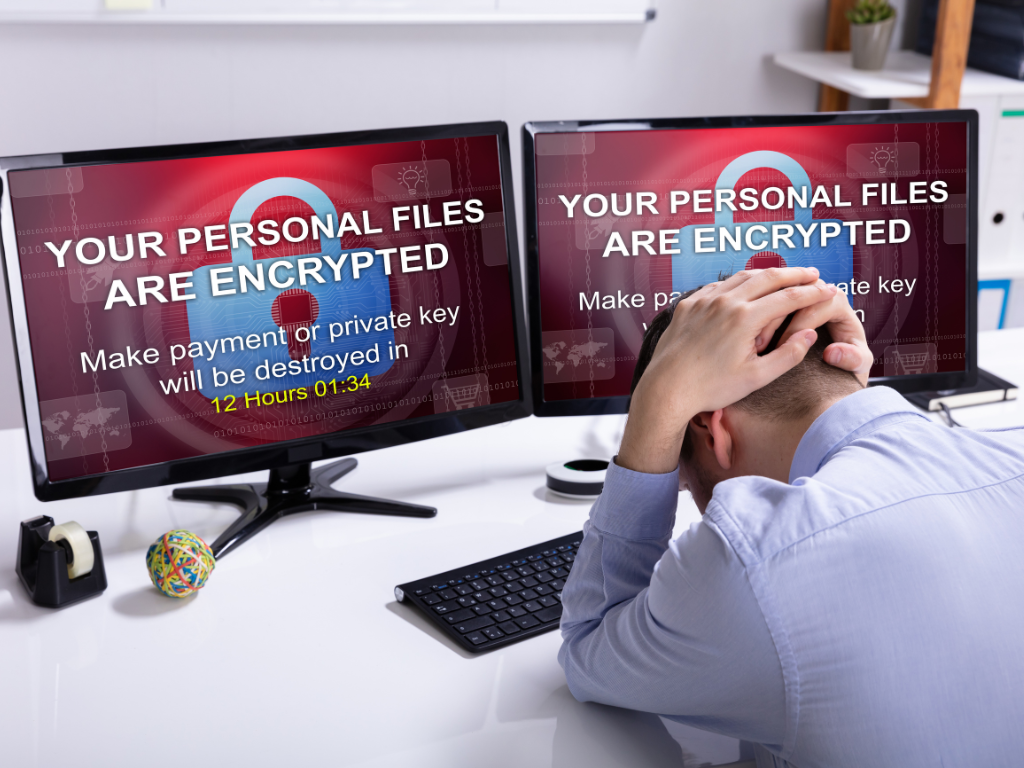
The attack was associated with ransomware. Ransomware is a type of cyberattack where criminals gain access to systems, steal or encrypt data, and demand payment. In many modern ransomware incidents, attackers do not only lock systems. They may also steal data and threaten to publish or sell it.
The Change Healthcare incident affected a highly connected part of healthcare operations. Because many organizations depended on Change Healthcare’s services, the disruption moved beyond one company. It became a wider healthcare system problem.
This is one of the most important lessons from the incident: when a central service provider is attacked, many dependent organizations can suffer even if their own systems were not directly breached.
Why the Incident Was So Disruptive
Healthcare is full of interconnected workflows. A patient visits a doctor, receives a prescription, goes to a pharmacy, uses insurance coverage, and expects the medication to be processed quickly. Behind this simple experience are many digital systems exchanging information.
If prescription claims cannot be processed, pharmacies may struggle to confirm coverage. If payment systems are unavailable, providers may face cash flow pressure. If claims cannot be submitted, billing operations may slow down. If eligibility checks fail, patients may face delays or unexpected costs.
This is why the Change Healthcare incident was so disruptive. It affected the digital plumbing behind healthcare operations.
Many people do not see these backend systems when everything works. But when they fail, the importance becomes clear.
Cybersecurity incidents in healthcare can quickly become operational incidents. They can affect patients, pharmacies, providers, insurers, and support teams at the same time.
Ransomware and Healthcare
Healthcare is a major target for ransomware groups. There are several reasons for this.
First, healthcare systems are critical. Hospitals, pharmacies, clinics, and patient services cannot easily stop. Attackers know that downtime creates pressure.
Second, healthcare data is sensitive. Patient records may include personal information, medical history, insurance details, identity information, payment data, and contact details. This data has value for criminals.
Third, healthcare environments are complex. They often include legacy systems, third-party vendors, connected medical devices, cloud platforms, insurance integrations, and many users with different access needs.
Fourth, healthcare organizations depend heavily on availability. Even short disruptions can create serious operational problems.
Ransomware groups exploit this pressure. They know that healthcare organizations and service providers may feel urgency to restore services quickly.
The Change Healthcare incident showed how one ransomware event can create ripple effects across a large sector.
Third-Party and Supply Chain Risk
One of the biggest lessons from the incident is third-party risk. Organizations may have strong internal controls, but they also depend on external service providers. If a vendor, platform, clearinghouse, payment processor, or technology partner is disrupted, the organization may still suffer.
Third-party risk is not only about data sharing. It is also about operational dependency.
A healthcare provider may ask: What happens if our claims processor goes offline? What happens if our pharmacy network connection fails? What happens if a cloud system is unavailable? What happens if a vendor account is compromised?
These are business continuity questions as much as cybersecurity questions.
Organizations should identify their most critical vendors and understand how dependent they are on them. They should ask whether backup processes exist, whether alternate providers are available, whether contracts include security obligations, and whether incident communication channels are clear.
A vendor’s cyber risk can become your operational risk.
Business Continuity Planning
The Change Healthcare attack also highlighted the importance of business continuity planning. When a critical platform goes down, organizations need alternative workflows.
For pharmacies, this may include manual processing procedures, alternate claim routes, emergency dispensing policies, direct communication with insurers, or temporary financial processes. For providers, it may include backup billing procedures, delayed claim submission plans, patient communication templates, and cash flow support strategies.
Business continuity planning should not be theoretical. It must be tested.
A plan that exists only in a document may not work during a real crisis. Teams need to practice what they will do if a major service provider is unavailable for days or weeks.
Cyber resilience means continuing critical operations even when systems are disrupted.
In healthcare, continuity is not just about business survival. It can affect patient access to care.
Data Protection and Patient Trust
Healthcare data is among the most sensitive types of personal information. Patients trust healthcare organizations to protect their records, insurance details, prescriptions, diagnoses, treatment history, and personal identity information.
When a ransomware attack involves healthcare data, the damage can be serious. Patients may worry about identity theft, fraud, privacy exposure, and misuse of medical information.
Data protection must therefore be central to healthcare cybersecurity. Sensitive data should be encrypted, access should be limited, logs should be monitored, and data sharing should be controlled. Organizations should know what data they hold, where it is stored, who has access, and which vendors process it.
Data minimization also matters. If a system does not need certain sensitive information, it should not collect or store it.
Healthcare cybersecurity is not only about restoring systems. It is also about protecting patient trust.
Identity and Access Control
Many ransomware incidents begin with stolen credentials, weak authentication, or compromised remote access. This makes identity security extremely important.
Healthcare organizations and technology providers should enforce multi-factor authentication, especially for remote access, privileged accounts, vendor access, cloud platforms, and administrative systems.
Access should follow the principle of least privilege. Users should only have access to what they need. Privileged accounts should be monitored carefully. Service accounts should be reviewed. Old accounts should be removed.
Remote access should be controlled and logged. Vendors should not have permanent broad access unless there is a strong reason and proper monitoring.
Identity is often the doorway attackers try first. Strong identity controls can stop many attacks before they become major incidents.
Network Segmentation and Containment
Network segmentation is another important lesson. If attackers gain access to one part of an environment, they should not be able to move freely everywhere.
Segmentation separates systems into zones based on function, sensitivity, and risk. Critical systems, backup systems, administrative systems, user workstations, databases, and external-facing services should not all sit on one flat network.
In healthcare, segmentation can help protect clinical systems, billing systems, pharmacy systems, administrative systems, and third-party connections.
Containment is essential during ransomware incidents. If malware spreads quickly, damage increases. Segmentation gives defenders time and control.
A flat network gives attackers space. A segmented network creates barriers.
Backup and Recovery
Ransomware defense requires reliable backup and recovery. Backups should be protected, isolated, tested, and monitored. Attackers often try to delete or encrypt backups before launching ransomware.
Healthcare organizations should know how quickly they can restore critical systems. They should identify which systems must come back first. They should test restoration, not only backup creation.
Recovery planning should include applications, databases, configurations, identity systems, cloud services, and vendor dependencies.
However, recovery is not only technical. Organizations also need communication plans, manual workflows, leadership decision-making, and regulatory response procedures.
The question is not simply, “Do we have backups?” The better question is, “Can we restore critical services safely and quickly when we need them most?”
Incident Communication
During a major healthcare cyber incident, communication is critical. Patients, providers, pharmacies, insurers, regulators, employees, and partners may all need updates.
Poor communication creates confusion. Clear communication helps people make decisions.
Organizations should define who communicates, what information can be shared, how often updates will be provided, and which audiences need different messages. Internal teams need operational guidance. Customers need service impact updates. Regulators may need formal notification. Patients may need instructions if their data is involved.
Communication should be accurate and calm. It should avoid unnecessary speculation but should not hide important impact.
In a large incident, silence can damage trust almost as much as the attack itself.
Lessons for Healthcare Providers
Healthcare providers should learn from the Change Healthcare incident even if they were not directly attacked.
They should map critical third-party dependencies. They should test downtime procedures. They should review cyber insurance coverage. They should improve identity controls. They should strengthen vendor risk management. They should prepare patient communication templates. They should confirm backup processes. They should train staff on cyber disruption scenarios.
Providers should also understand that cybersecurity is not only the responsibility of the IT team. Billing teams, pharmacy teams, clinical teams, compliance teams, legal teams, and leadership all have roles during a major disruption.
Healthcare is a connected ecosystem. Resilience must also be connected.
Lessons for Technology Providers
Healthcare technology providers carry heavy responsibility. If their platforms support critical healthcare workflows, they must build strong security and resilience.
This includes secure architecture, regular testing, patching, identity controls, network segmentation, monitoring, vulnerability management, incident response, backup testing, and transparent customer communication.
Technology providers should also support customers during downtime. They should provide clear workarounds, status updates, escalation paths, and recovery guidance.
A provider serving healthcare is not just offering software. It is supporting essential services.
The higher the dependency, the higher the responsibility.
Final Thoughts
The Change Healthcare ransomware incident was a major reminder that healthcare cybersecurity has real-world consequences. It disrupted pharmacy networks, claims processing, payment workflows, and healthcare operations across the United States.
The incident showed the importance of third-party risk management, business continuity, identity security, network segmentation, data protection, backup recovery, incident communication, and sector-wide resilience.
Healthcare organizations cannot think only about their own systems. They must understand the vendors, platforms, and services they depend on. They must ask what happens when one critical link fails.
Ransomware is not only a technology problem. In healthcare, it can become a patient access problem, a financial problem, a trust problem, and a public resilience problem.
The best lesson from this incident is clear: healthcare systems must be secure, recoverable, and prepared before attackers test them.
To know more about Anand Shinde and his work in cybersecurity, awareness, and books:
https://anandshinde.com/
Have knowledge, experience, or a practical guide you want to turn into a book? Get your book published with DevOM Publishing:
https://www.devompublishing.com/index.php
If your healthcare organization or business needs ransomware readiness, third-party risk review, incident response planning, or protection against modern digital threats, visit CyberPrysm:
https://cyberprysm.com/
Healthcare runs on trust. Cybersecurity helps make sure that trust keeps running when systems are under attack.