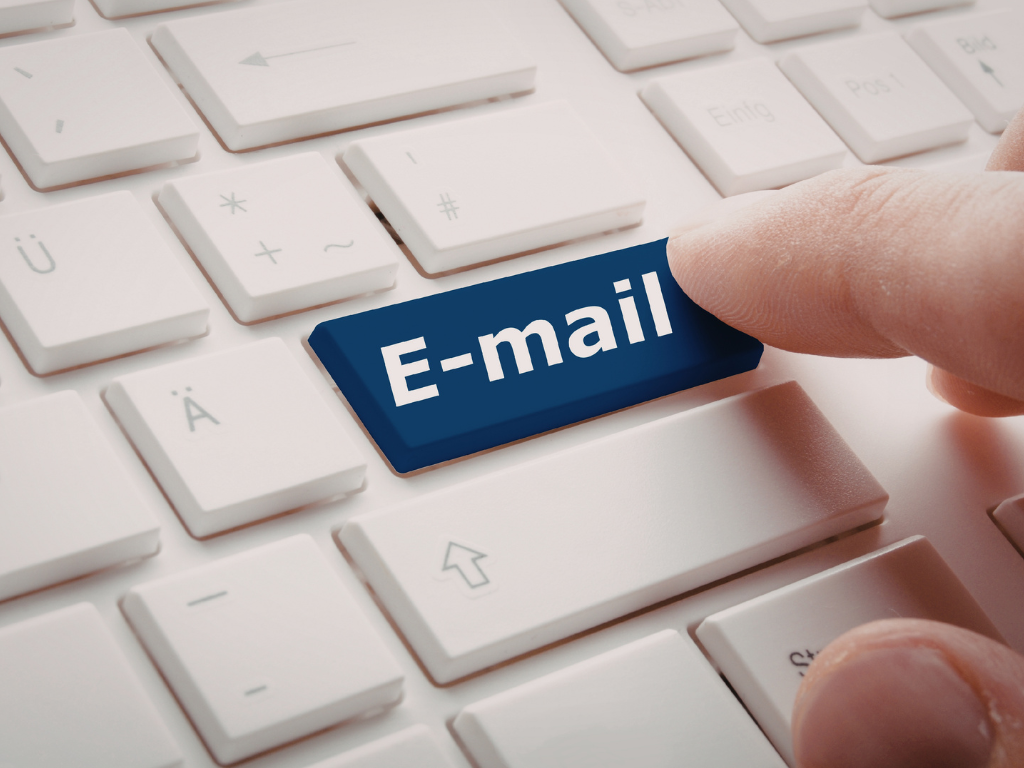
Today, email is so common that most people do not even think about it as a technology miracle. We open our inbox, send work updates, receive bank alerts, reset passwords, subscribe to newsletters, share documents, apply for jobs, and communicate with people across the world within seconds. For many professionals, the working day begins with email and ends with email.
But there was a time when sending a message from one computer to another was not normal. Computers were large, expensive, and mostly used by universities, research centers, government agencies, and technical experts. They were not personal devices sitting on every desk. They were machines used for calculations, programming, and research.
Then came one simple idea: what if a person using one computer could send a message to a person using another computer?
That idea gave birth to the first network email. It was not created with fireworks, marketing campaigns, or a grand public launch. It began quietly as a technical experiment. But that experiment changed communication forever.
Understanding the first email is important because email became one of the earliest and most successful uses of computer networking. It also became one of the first digital tools to show both the promise and the risk of the connected world.
What Is Email?
Email, short for electronic mail, is a method of sending digital messages from one user to another through a computer network. In simple words, email is the digital version of sending a letter, but instead of paper, envelopes, and postal delivery, it uses computers, servers, addresses, and communication protocols.
An email usually contains a sender, a receiver, a subject, a message body, and sometimes attachments. It may look simple on the screen, but behind every email there is a complete technical process. Your device sends the message to a mail server, the server checks where it should go, and then the message travels through the network until it reaches the recipient’s mailbox.
This process now happens so quickly that we barely notice it. But in the early days of computing, even this basic idea was revolutionary.
Communication Before Email
Before email, written communication was much slower. People used letters, telegrams, memos, printed notices, and telephone calls. In offices, communication often moved through paper files and physical documents. In universities and research organizations, sharing technical updates took time.
Even early computers did not solve this problem immediately. Some systems allowed users on the same machine to leave messages for each other. But that was not the same as modern email. Those messages were limited to one computer. If two people were using different machines, especially in different locations, communication was still difficult.
The missing piece was networking.
Once computers started being connected through networks such as ARPANET, a new question became possible: could messages travel from one computer to another?
That question led directly to one of the most important moments in digital history.
The First Network Email
The first network email is generally credited to Ray Tomlinson, a computer engineer working on ARPANET in 1971. ARPANET was an early computer network and an important predecessor of the modern internet.
Tomlinson was working with existing programs. One program allowed users on the same computer to leave messages. Another program helped transfer files between computers. He combined ideas from both and created a way to send a message from one computer to another over a network.
This may sound simple today, but at that time it was a breakthrough. It meant that communication was no longer locked inside one machine. A user on one computer could send a message to a user on another computer. This was the beginning of network email.
The first email itself was not a poetic message, a formal announcement, or a carefully written statement. It was likely a test message made up of random characters. The exact text was not preserved because, at the time, no one realized that this simple test would become a historic moment.
That is one of the most fascinating things about technology history. Sometimes the biggest revolutions begin as experiments that look ordinary to the people doing them.
Why the “@” Symbol Became Important
One of Ray Tomlinson’s most important decisions was choosing the “@” symbol for email addresses. Today, every email user understands this format:
But this format had to be invented.
The problem was simple. The system needed to identify two things: the user and the computer or host where that user could be found. The email address needed a symbol to separate the person’s name from the machine’s name.
Tomlinson chose “@” because it made logical sense. It showed that a user was “at” a particular computer. It was also not commonly used in names, which made it practical for addressing.
This small decision became one of the most recognizable symbols of the digital age. Before email, the “@” symbol was not widely used by ordinary people. After email, it became a global sign of online identity.
A single character helped create the structure of modern digital communication.
Why the First Email Matters
The first email matters because it proved that digital communication could move across machines and locations. It showed that computer networks were not only useful for technical data transfer. They could also help human beings communicate.
This changed how researchers worked. It allowed faster collaboration. It reduced delays. It helped people exchange ideas without waiting for physical documents or scheduled calls. As more people used computer networks, email quickly became one of the most popular applications.
In fact, email helped make networking useful to ordinary users. A network is not valuable only because machines are connected. It becomes valuable when people can use that connection to communicate, solve problems, and share information.
Email gave people a reason to use networks daily.
From Research Tool to Daily Life
At first, email was mainly used by researchers, engineers, universities, and technical communities. But as personal computers, business networks, and the internet became more common, email entered offices, schools, homes, and eventually mobile phones.
Businesses adopted email because it was faster than letters and more detailed than phone calls. Universities used it for academic communication. Governments used it for official correspondence. Families used it to stay in touch. Later, online services started using email for account registration, password resets, confirmations, receipts, and alerts.
Email became a digital identity layer. To sign up for many online services, you need an email address. To recover an account, you often need email access. To receive official notices, you may depend on email. This made email not just a communication tool but a key part of online life.
That importance also made email a target.
The Dark Side of Email
As email became popular, cybercriminals quickly understood its power. If you can reach a person’s inbox, you can influence their decisions. You can trick them, scare them, pressure them, or make them click something dangerous.
This is why phishing became one of the most common cyber threats. A phishing email may look like it comes from a bank, delivery company, employer, government agency, social media platform, or trusted brand. The goal is usually to steal passwords, payment details, personal information, or access to accounts.
Email is also used to spread malware. Attackers may send infected attachments, fake invoices, malicious links, or urgent notices. Some emails pretend to be from senior executives and ask employees to transfer money or share sensitive information. These attacks are often called business email compromise.
The same tool that made communication faster also gave criminals a direct path to victims.
This does not mean email is bad. It means email must be used carefully.
Common Email Threats
There are several email threats that every user should understand.
- Phishing is when attackers trick users into sharing sensitive information. A common example is a fake login page that steals your username and password.
- Malware emails contain infected attachments or links. Once opened, they may install harmful software on your device.
- Spam is unwanted bulk email. Some spam is only annoying, but some contains scams or malicious content.
- Sextortion and blackmail emails try to scare victims by claiming that private content will be exposed unless money is paid.
- Business email compromise targets organizations by impersonating executives, vendors, or employees.
- Fake invoice scams trick businesses into paying fraudulent bills.
- Credential theft emails attempt to capture passwords, one-time codes, or account recovery information.
These threats work because they target human behavior. They use urgency, fear, curiosity, authority, trust, and confusion.
How to Use Email Safely
Email safety begins with awareness. Before clicking a link or opening an attachment, pause and think. Ask yourself whether the message was expected, whether the sender is genuine, and whether the request makes sense.
- Use strong and unique passwords for your email account. Your email is often the recovery point for many other accounts, so protecting it is extremely important.
- Enable multi-factor authentication. Even if someone steals your password, MFA can stop them from logging in.
- Check sender addresses carefully. Scammers often use addresses that look similar to real ones but contain small changes.
- Avoid opening unexpected attachments, especially files that ask you to enable macros or install software.
- Do not share one-time passwords or verification codes through email.
- Be careful with urgent financial requests. If someone asks you to transfer money, change bank details, or buy gift cards, verify through another trusted communication method.
- Keep your device and email application updated.
- Report suspicious emails instead of forwarding them casually to others.
These habits may look simple, but they can prevent serious incidents.
Email and Privacy
Email also teaches an important privacy lesson. Many people treat email like a private diary, but email is often stored across servers, devices, backups, and applications. Sensitive information sent through email can be exposed if an account is compromised or if the wrong recipient is selected.
Avoid sending highly sensitive information through ordinary email unless it is properly protected. Be careful with identity documents, passwords, financial details, private photographs, legal papers, and business secrets.
For organizations, email privacy requires policies, encryption, access controls, retention rules, monitoring, and user training. For individuals, it requires good judgment and secure habits.
The first email was a technical experiment. Today, email privacy is a personal and professional responsibility.
Final Thoughts
The first email was not famous when it was sent. It was just a test between computers. But that test changed the way the world communicates.
From one experimental message in 1971, email grew into one of the most important tools in modern life. It helped build digital business, online education, remote work, global communication, and internet identity. It connected people across distance and time.
But email also became one of the most abused tools in cybercrime. Phishing, scams, malware, blackmail, fraud, and identity theft often begin in the inbox.
That is why the history of email is not only a story of invention. It is also a reminder that every powerful technology must be protected. The inbox may look ordinary, but it is one of the most important doors to your digital life.
Use it wisely. Protect it carefully. And never forget that one small message changed the future of communication.
To know more about Anand Shinde and his work in cybersecurity, awareness, and books:
https://anandshinde.com/
Are you planning to write your own book or publish your professional knowledge? Get your book published with DevOM Publishing:
https://www.devompublishing.com/index.php
If your business needs cybersecurity guidance, awareness, or protection against modern digital threats, visit CyberPrysm:
https://cyberprysm.com/
From the first email to today’s crowded inbox, one thing is clear: communication connects us, but cybersecurity protects us.